
In short: pet-friendly apartments in Ho Chi Minh City exist, but whether you can keep a pet depends on two separate yeses – the owner’s and the building’s. Cats and small dogs are accepted in many buildings, often with rules about lifts and lobbies; large dogs are harder and are usually easier in a house or villa. The best areas for pet owners are Thao Dien, Thu Thiem, Phu My Hung and the big Vinhomes compounds, because of their parks and riverside paths.
Tenants with pets have a smaller pool to choose from, so it pays to be organised. We’ve found that most refusals come from owners who have had a bad experience before, not from strict rules – and a clear offer can change their mind.
The two permissions you need
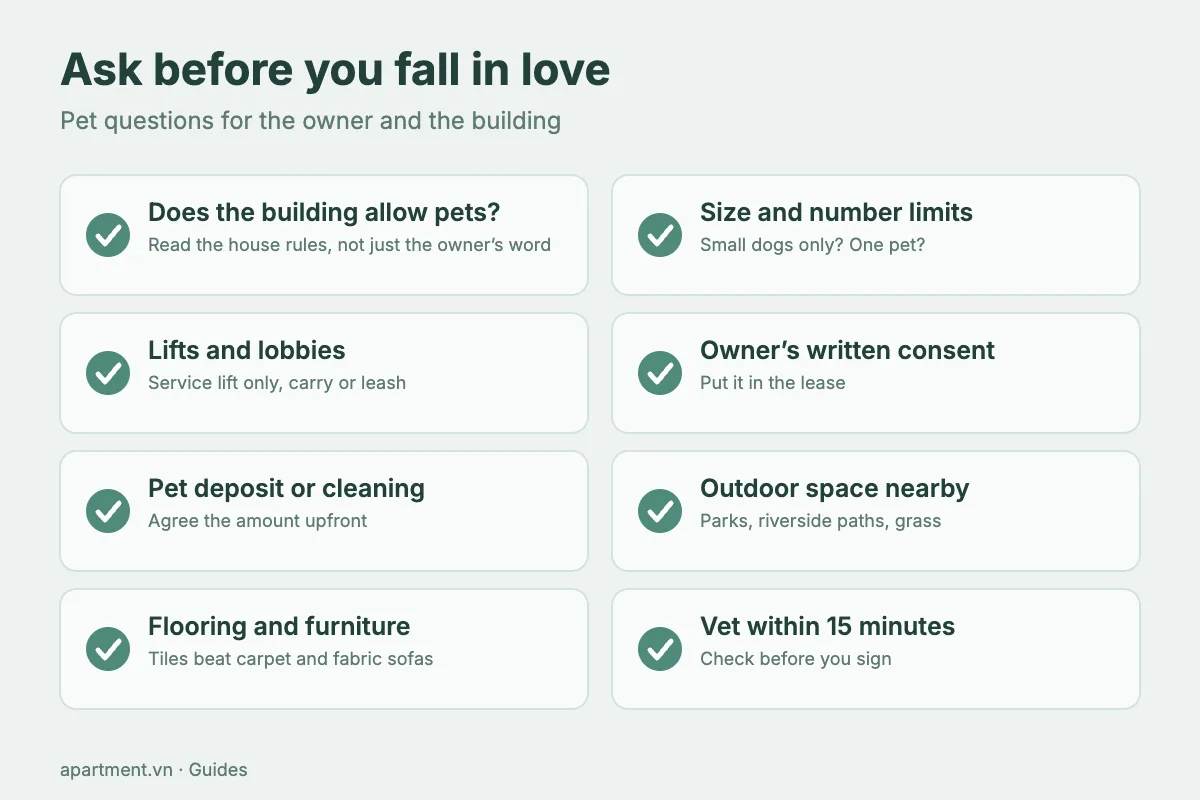
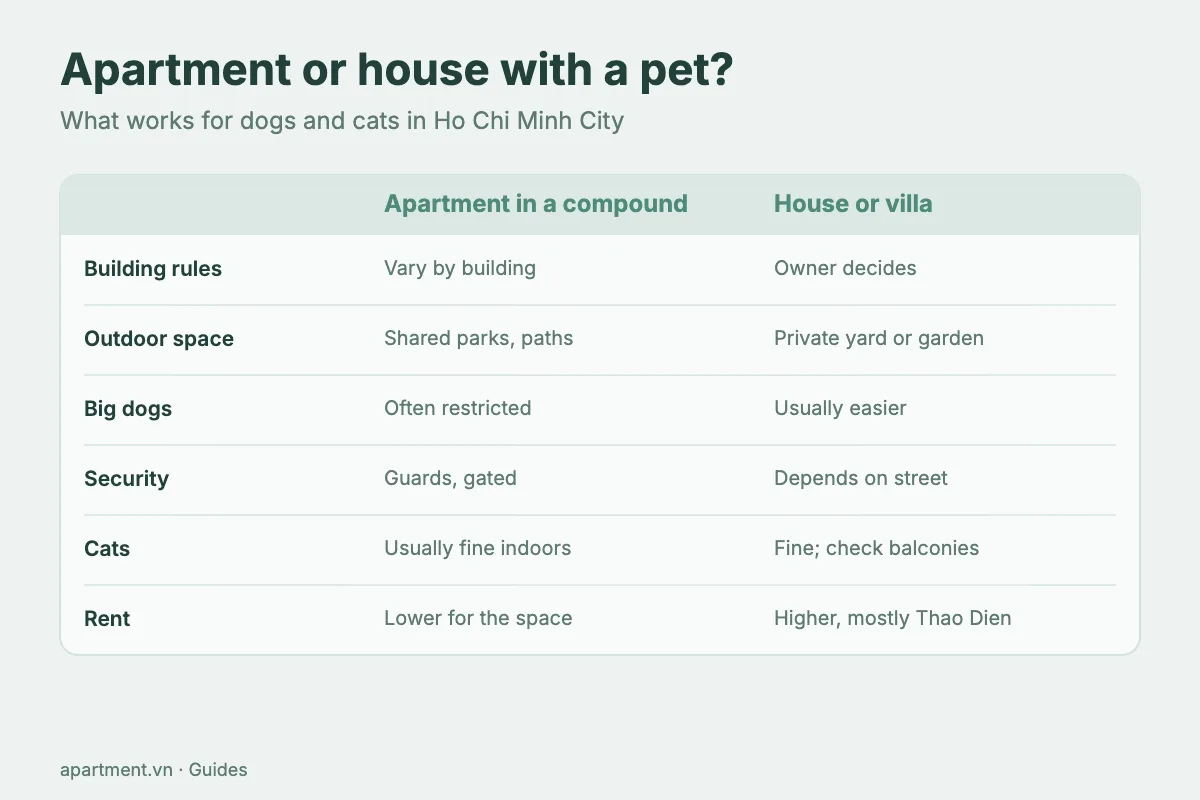
- The building. Each building has its own house rules. Some allow pets freely, some allow small pets with conditions (registration, service lift only, leash or carrier in common areas), and some don’t allow them at all.
- The owner. Even in a pet-friendly building, the owner can refuse. Get written consent in the lease.
A common mistake is relying on the owner’s “it’s fine” when the building rules say otherwise. If management enforces the rules later, you’re the one who has to move.
Best areas for pet-friendly apartments in Ho Chi Minh City
| Area | Why it works for pets |
|---|---|
| Thao Dien – An Khanh Ward | Houses with gardens, vets and pet shops nearby, a pet-loving expat community |
| Thu Thiem – An Khanh Ward | Wide streets, riverside paths, newer buildings with clear rules |
| Phu My Hung – Tan My Ward | Parks and lakes, quiet footpaths, family-oriented |
| Vinhomes Central Park – Thanh My Tay Ward | Large riverside park inside the compound |
| Vinhomes Grand Park – Long Binh Ward | Huge central park, lower rents for more space |
Compare rents across these areas in our guide to apartment rent prices in Ho Chi Minh City.
How to persuade an owner
- Describe your pet honestly: type, size, age, and whether it’s house-trained.
- Offer a pet clause: you pay for professional cleaning at move-out and repair any damage.
- Offer a slightly higher deposit rather than higher rent.
- Show vaccination records and, if you have one, a reference from a previous landlord.
- Choose units with tiled floors and simple furniture – owners worry less.
What to put in the lease
- The owner’s permission, naming the type and number of pets.
- Any pet deposit and how it is returned.
- Responsibility for cleaning and damage at move-out.
- A note that you’ll follow the building’s pet rules.
Our guide to the apartment lease agreement in Vietnam covers the rest of the clauses to check.
Living with pets in the city
Keep vaccinations up to date, especially rabies, and use a leash in public areas. The heat is hard on dogs, so walk early in the morning and in the evening. Flooding in the rainy season and busy roads make a secure balcony and a well-closed door important, especially for cats.
Find pet-friendly apartments in Ho Chi Minh City
Tell us about your pet when you contact us and we’ll only show you buildings and owners that accept them. You can also browse rentals in An Khanh Ward, Tan My Ward and Thanh My Tay Ward.
Searching for pet-friendly apartments in Ho Chi Minh City by ward? Vietcetera’s post-merger guide to Ho Chi Minh City explains the new ward names used in listings.
Frequently asked questions
Are pets allowed in apartments in Ho Chi Minh City?
It depends on the building and the owner. Many buildings allow cats and small dogs with rules about lifts and common areas; some do not allow pets at all.
Which areas are best for renting with a dog?
Thao Dien, Thu Thiem, Phu My Hung and the Vinhomes compounds, thanks to parks, riverside paths and houses with gardens.
Do landlords charge a pet deposit in Vietnam?
Some do. A slightly higher deposit or a move-out cleaning clause is a common way to get an owner to agree.
Can I rent an apartment with a large dog?
It is harder. Many buildings limit dog size, so a house or villa – mostly in Thao Dien – is often the easier option.
Should pet permission be in the lease?
Yes. Get the owner’s written permission in the lease and check the building’s house rules separately.